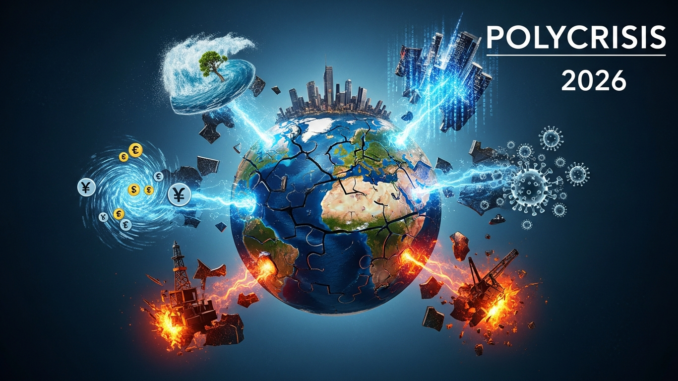
The global insurance industry is entering a new era in 2026—one defined not by a single challenge, but by a “polycrisis.” This term refers to the convergence of multiple, interconnected risks occurring at the same time, creating pressure on insurers, regulators, policyholders, and investors alike.
From climate-related disasters and cyber threats to economic uncertainty and geopolitical instability, insurers are now required to manage more complex risk environments than ever before. Understanding this shift is essential for anyone who relies on insurance coverage or invests in insurance-related businesses.
What Is a “Polycrisis” in the Insurance Industry?
A polycrisis occurs when several major risks overlap and amplify one another, rather than appearing in isolation. In the insurance sector, this means insurers are facing multiple large-scale threats simultaneously, including:
-
Increasing frequency and severity of natural disasters
-
Rising cyberattacks and digital fraud
-
Economic inflation affecting claim costs
-
Supply chain disruptions
-
Regulatory changes across different regions
Unlike past cycles, these risks are interconnected, making them harder to predict and manage using traditional models.
Why 2026 Is a Turning Point for Global Insurance
The year 2026 marks a critical shift because insurers are now experiencing structural changes, not short-term disruptions. Climate risks are no longer “future concerns,” cyber incidents are escalating in scale, and economic pressures are reshaping pricing strategies.
As a result, insurers are being forced to:
-
Reassess how risk is priced
-
Reduce exposure in high-risk regions
-
Tighten underwriting standards
-
Invest heavily in technology and data analytics
This transformation affects not only insurance companies but also the people and businesses they insure.
Impact on Policyholders
For policyholders, the polycrisis brings both challenges and important considerations.
1. Higher Premiums in High-Risk Areas
As losses increase, insurers may raise premiums, especially for:
-
Property insurance in disaster-prone regions
-
Business interruption coverage
-
Cyber insurance policies
2. Stricter Coverage Conditions
Some policies may now include:
-
Higher deductibles
-
More exclusions
-
Reduced coverage limits
3. Greater Importance of Risk Awareness
Policyholders are encouraged to:
-
Review policies carefully
-
Understand exclusions
-
Compare coverage options across providers
Being informed is now more important than ever.
What This Means for Investors
For investors, the polycrisis presents both risk and opportunity.
Risks:
-
Increased claim payouts impacting profitability
-
Market volatility affecting insurance stocks
-
Regulatory pressure on capital reserves
Opportunities:
-
Growth in specialty insurance sectors (cyber, climate risk, health)
-
Innovation in insurtech and data-driven underwriting
-
Long-term demand for insurance as risks become more complex
Investors who understand these dynamics can better evaluate which companies are adapting—and which are falling behind.
How Insurers Are Adapting
To survive and grow in this environment, insurers are adopting new strategies, such as:
-
Advanced risk modeling using artificial intelligence
-
Diversification across regions and product lines
-
Partnerships with technology providers
-
Focus on prevention, not just payouts
These changes signal a shift from reactive insurance to proactive risk management.
Conclusion
The global insurance industry’s polycrisis in 2026 is not a temporary challenge—it is a fundamental transformation. For policyholders, it means becoming more informed and proactive. For investors, it requires deeper analysis and long-term thinking.
While the road ahead is complex, insurance remains a critical pillar of economic stability. Those who understand the evolving risk landscape will be better positioned to navigate the uncertainties of the future.
Leave a Reply