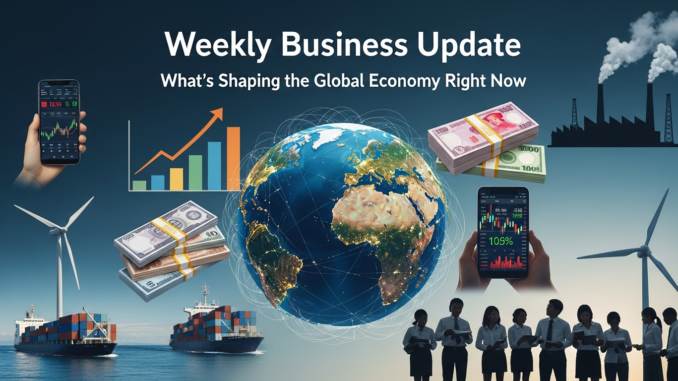
The global economy is constantly changing, influenced by technology innovation, financial policy, and shifting market confidence. This week’s business developments reveal how companies and institutions are adapting to economic uncertainty while positioning themselves for long-term growth.
In this weekly business update, we examine the key factors currently shaping the global economy and why they matter.
Economic Uncertainty Continues to Influence Business Decisions
Across many regions, businesses are operating in an environment of cautious optimism. Inflation concerns, interest rate expectations, and geopolitical risks remain central to economic discussions.
As a result, companies are prioritizing stability over aggressive expansion. Cost control, operational efficiency, and strategic planning are now more important than rapid growth.
Why this matters:
When businesses act cautiously, hiring, investment, and consumer spending can slow. Understanding this trend helps individuals and organizations prepare for potential economic shifts.
Technology Innovation Drives Long-Term Growth
Despite economic pressure, technology continues to be a major driver of global growth. Companies are investing in automation, artificial intelligence, and cloud-based systems to improve productivity and reduce costs.
Digital tools are no longer optional. They have become essential for competitiveness in nearly every industry, from finance and retail to manufacturing and logistics.
Why this matters:
Technology investment improves efficiency and creates new opportunities. Businesses that embrace innovation are better positioned to adapt to future challenges.
Financial Institutions Adjust to Market Conditions
Banks and financial institutions are responding to tighter economic conditions by strengthening risk management and reviewing lending policies. Many are focusing on long-term financial stability rather than short-term gains.
At the same time, digital banking and online payment systems continue to expand, improving access and convenience for customers.
Why this matters:
Changes in the financial sector can affect loans, savings, and payment services. Consumers benefit from understanding how these shifts may impact their financial decisions.
Global Markets Reflect Investor Caution
Stock markets showed mixed performance this week as investors responded to economic data and corporate earnings. While some sectors remained resilient, others experienced increased volatility.
This behavior suggests that investors are carefully balancing risk and opportunity during uncertain times.
Why this matters:
Market trends influence personal investments, pensions, and business confidence. Staying informed allows readers to make more informed financial choices.
Businesses Focus on Sustainability and Resilience
Sustainability and resilience are becoming central business priorities. Companies are investing in supply chain stability, environmental responsibility, and long-term planning.
These efforts are not only about compliance but also about building trust with customers and stakeholders.
Why this matters:
Sustainable business practices support long-term success. Consumers increasingly prefer companies that demonstrate responsibility and transparency.
Conclusion
This week’s business updates highlight a global economy focused on adaptation, resilience, and smart growth. While challenges remain, businesses that invest in innovation, manage risk effectively, and plan for the long term are better prepared for the future.
By staying informed about these trends, readers can better understand the forces shaping the global economy and make more confident personal and professional decisions.
Leave a Reply